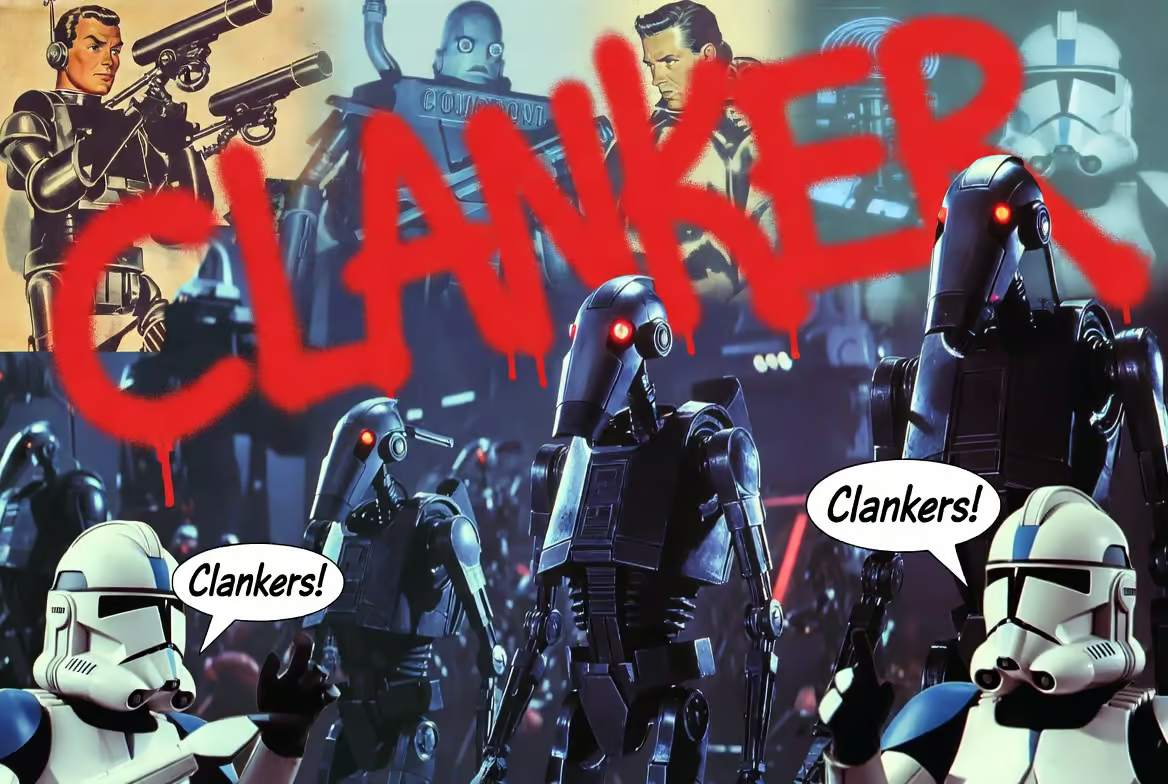
In recent years, the rise of automation has sparked considerable debate about its impact on society and the workforce. As we increasingly interact with AI-driven systems—be it customer service bots or delivery drones—an intriguing phenomenon has emerged: a growing resistance to these technologies. This sentiment has given birth to a new term: “clankers.” Have you ever found yourself frustrated while dealing with a chatbot or watching a delivery robot block your path? You’re not alone. This article explores the cultural significance of “clankers,” how the term evolved, and what it reveals about our relationship with technology.
We’ll delve into the origins of the term, its contemporary usage, and the societal implications of our increasing pushback against automated systems. Additionally, we’ll examine how this resistance is shaping consumer behavior and potentially influencing business models. So, let’s dive in and understand what “clankers” mean for our future.
What Exactly Are “Clankers”? Understanding the Term
To grasp the current discourse around automation, it’s essential to define the term itself. “Clankers” is a derogatory label aimed at mocking robots and AI systems. The word evokes the sound of clunky machinery, stripping away any veneer of sophistication marketed by tech companies. By referring to an AI as a “clanker,” you essentially reduce a complex system to a mere collection of metal parts.
Interestingly, using such a pejorative serves to anthropomorphize AI, placing it in an “outgroup” that society feels compelled to critique. So, why do we feel the need to label these machines in such a way? The answer lies in a growing anxiety about the encroachment of automation into our daily lives.
The Evolution of “Clanker” in Popular Culture
The term has undergone a fascinating transformation from niche sci-fi jargon to a mainstream anti-AI slogan. Its roots can be traced back to the mid-20th century, but let’s break down its journey.
The 1958 Sci-Fi Foundations
The earliest known use of “clanker” appeared in a 1958 essay by science fiction writer William Tenn. In this context, it described the uninspired, mechanical workers depicted in early films such as Metropolis. Even back then, the term was associated with a lack of human creativity.
The Star Wars Influence
For many today, the term is most closely associated with the Star Wars franchise. It gained widespread popularity through the 2005 video game Star Wars: Republic Commando and the animated series The Clone Wars. In these narratives, elite clone troopers frequently used «clanker» to insult the mass-produced droids they fought against, reinforcing its derogatory connotation.
Historical Context and Labor Concerns
The roots of our anxiety about machines can be traced even further back to Karel Čapek’s 1920 play R.U.R. (Rossum’s Universal Robots), which introduced the term “robot.” This historical context reveals our long-standing fears about machines replacing human labor, a concern that only intensifies as automation becomes more prevalent in everyday life.
Why “Clanker” Resonates Today
So, why is everyone suddenly using the term “clanker”? The answer lies in our changing world, where the presence of automation is becoming increasingly tangible.
The Physical Manifestation of Automation
AI is no longer just an abstract concept; it has a physical presence. Delivery robots are becoming common sights on city streets, often causing frustration among pedestrians. People are beginning to feel the real-world impacts of automation, leading to a sense of urgency in their reactions.
The Cognitive Resistance
Experts warn about the risks of “cognitive atrophy” as we increasingly rely on AI for tasks like writing and decision-making. By labeling these systems with terms like “clanker,” we create a psychological barrier against accepting them as authoritative sources. It’s a way to assert our human intellect over cold, hard code.
The Impact on Customer Experience and Legislation
The “clanker” sentiment has spilled over from social media into customer service interactions.
The Clanker Threshold in Customer Service
In user experience research, a phenomenon known as the “Clanker Threshold” has emerged. Customers often start interactions with chatbots politely but quickly shift to frustration upon realizing they are not speaking to a human. This shift often involves using the term “clanker,” reflecting their disappointment with automated systems.
Data supports this sentiment: 64% of customers prefer human interaction in service roles, while 53% would switch companies if they discovered that AI was managing their support.
Legislative Responses to Consumer Frustration
The rise of the “clanker” label has even caught the attention of lawmakers. For instance, Senator Ruben Gallego has pushed for transparency in customer service interactions, advocating that companies disclose when they are using automated systems. He has even employed the term “clanker” in social media campaigns to resonate with consumer frustrations.
Is “Clanker” a Real Slur? A Linguistic Perspective
Linguists have debated whether “clanker” qualifies as a genuine slur. Traditional slurs target oppressed human groups, while “clanker” is directed at machines lacking consciousness. However, the use of the term reflects a desire to differentiate between human and robotic entities, raising questions about our relationship with technology.
While some view it as harmless slang, others argue it perpetuates the notion of “othering.” By employing such language, we inadvertently elevate machines to a level of relevance in our social discourse.
The Future of Humanism in the Age of AI
The surge of “clanker” memes across platforms like TikTok showcases a cultural pushback against automation. Viral videos depicting public frustration with delivery robots emphasize this sentiment, with many people rallying against the intrusion of AI into their lives.
As a result, we’re likely entering an era where companies will market their services based on human labor, creating a “Biological Premium.” This trend mirrors the rise of organic food markets, where the absence of automation becomes a selling point.
In this evolving landscape, it’s evident that society is not ready to relinquish its social, cognitive, and physical spaces to automation. The term “clanker” has become a rallying cry, representing a desire to reclaim our human experiences in an increasingly automated world.