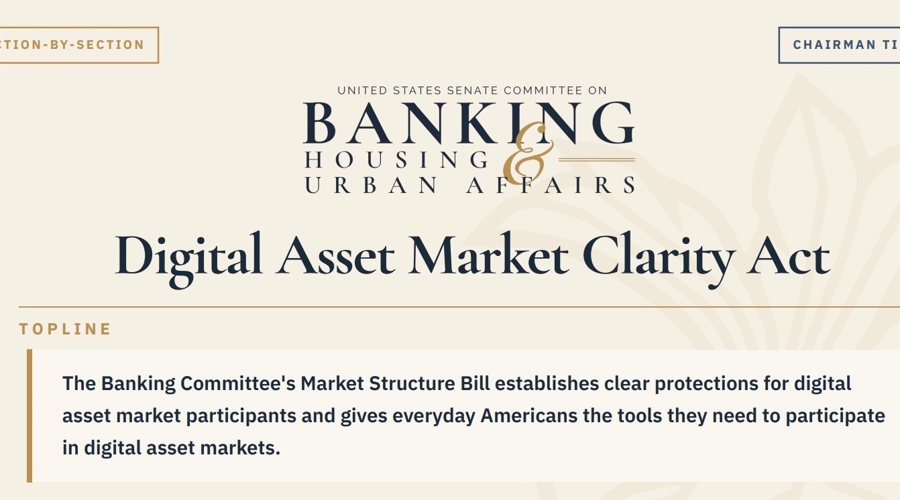
The growing landscape of digital assets has prompted significant legislative movement in the United States. Recently, the Senate Banking Committee took a significant step by approving the Digital Asset Market Clarity Act, a pivotal piece of legislation aimed at establishing a robust federal framework for cryptocurrency regulation. This act is designed to clear up long-standing uncertainties surrounding the oversight of digital currencies, which have become increasingly popular and complex. Are you curious about how this could impact the crypto market? In this article, we’ll explore the details of the Act, its implications for regulatory bodies, and what it means for investors.
Understanding the Digital Asset Market Clarity Act
The Digital Asset Market Clarity Act is not just another piece of legislation; it’s a comprehensive 309-page document that outlines a new framework for the regulation of cryptocurrencies in the U.S. This bill aims to clearly delineate the roles of the SEC and the CFTC in overseeing digital assets. This is crucial because, until now, confusion has reigned regarding which agency holds jurisdiction over various types of digital currencies.
The Senate Banking Committee voted 15-9 in favor of advancing the bill, which now heads to the full Senate for further consideration. To pass, it will require a minimum of 60 votes, indicating that bipartisan support will be essential for its success.
What Does the Act Propose?
At its core, the Act aims to create a dual-regulatory framework. Here’s how it plans to split oversight:
This clear division aims to resolve ongoing disputes between the two agencies, which have previously created confusion and hindered regulatory clarity.
The Broader Impact on the Crypto Market
The implications of this Act extend beyond just regulatory clarity. It sets a precedent for how digital assets will be treated in the future, potentially encouraging more institutional investment. With clearer guidelines, companies may feel more comfortable participating in the crypto space, leading to increased market stability.
Interestingly, the bill was originally passed by the House in 2025, showing a growing recognition of the need for structured regulations in the rapidly evolving digital asset landscape.
Recent Developments in the Crypto Industry
As the regulatory landscape shifts, major players in the crypto market are also making headlines. For instance, eToro recently reported a remarkable 37% increase in its quarterly profits, reaching $82 million. This growth is indicative of the increasing interest in trading platforms that facilitate digital asset transactions.
Similar positive trends are seen with XTB, which announced a 6% rise in stock value after surpassing 1 million domestic accounts. This suggests that retail investors are increasingly engaging with digital assets, reflecting a broader trend of market maturation.
Challenges and Opportunities Ahead
While the new legislation offers a path forward, challenges remain. The SEC has delayed the launch of several prediction market ETFs, reflecting ongoing regulatory scrutiny. Additionally, the shutdown of offshore broker YaMarkets highlights the difficulties some firms face in adapting to changing regulations.
However, opportunities abound for those willing to navigate this evolving landscape. The formation of the Bahamas Institute of Forex and CFD Issuers (BIFCI) by brokers like Pepperstone and Capital.com illustrates a proactive approach to regulatory engagement.
Looking to the Future of Digital Assets
As the digital asset market continues to evolve, the introduction of the Digital Asset Market Clarity Act signifies a crucial turning point. With clearer regulations, the stage is set for more robust participation from both retail and institutional investors.
The ongoing discussions around digital assets, prediction markets, and the regulatory framework will undoubtedly shape the future of investing. Are you ready to dive into this exciting new world?