As a lover of speculative fiction, you might find yourself captivated by the intriguing world of forbidden science. Have you ever wondered why certain scientific inquiries remain shrouded in secrecy? This fascinating field explores the intersection of groundbreaking ideas and societal boundaries, revealing why some topics are deemed too controversial for mainstream discourse. In this article, you’ll embark on a journey through the enigmatic corridors of forbidden science, discovering what fuels these intense debates and why they matter to our understanding of the future.
In the following sections, you’ll explore key concepts, notable figures, and the ethical dilemmas surrounding this captivating field. Let’s dive into the unknown together and uncover the mysteries that lie beneath the surface.
Understanding Forbidden Science
When you think about forbidden science, imagine a realm where research pushes the limits of ethical norms and societal expectations. This discipline encompasses controversial areas such as human cloning, gene editing, and even the study of extraterrestrial life. These topics often ignite fierce debates among scientists, ethicists, and the general public alike.
For instance, the creation of Dolly the sheep in 1996 marked a significant milestone in cloning, yet it also sparked a global ethical uproar. Fast forward to 2018, when a Chinese scientist claimed to have created the first gene-edited babies, an act that drew widespread condemnation. Such events illustrate that the line between what is considered taboo and what is accepted science is often blurred.
The Ethical Dilemmas of Forbidden Science
Discussing forbidden science brings you face-to-face with complex ethical dilemmas. The crux of these debates usually revolves around whether certain scientific advancements should be pursued. In a survey conducted by the Pew Research Center, a striking 60% of U.S. adults expressed concern over using gene editing to enhance a child’s intelligence, viewing it as a step too far.
Moreover, the scientific community has shown a commitment to addressing these dilemmas. The Asilomar Conference on Recombinant DNA in 1975 is a prime example, where scientists paused to develop ethical guidelines for their research, ensuring that they tread carefully in this uncharted territory.
Characters and Stories in Forbidden Science
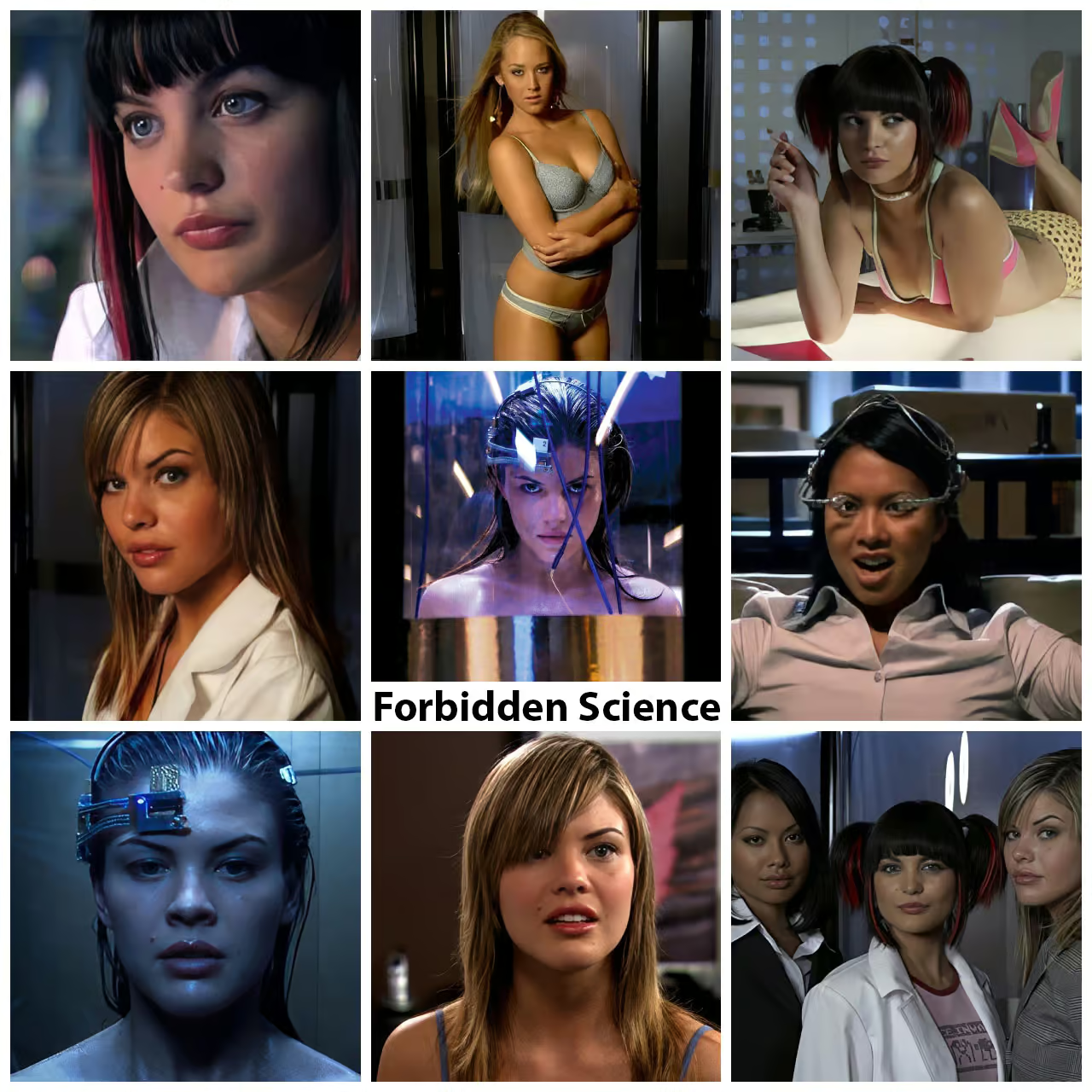
Television shows like «Forbidden Science» delve into these ethical quandaries through engaging narratives. The series features a dynamic cast of characters who explore the far reaches of scientific discovery, each representing different perspectives on the moral implications of their work.
- Vanessa Broze portrays a groundbreaking scientist navigating the complexities of cloning and advanced technology.
- Levi Freeman adds suspense as an industrial spy, illustrating how corporations may exploit forbidden knowledge.
- Joanne Alderson’s character embodies the moral ambiguity prevalent in scientific innovation.
These characters provoke thought and discussion about the boundaries of scientific exploration, asking viewers where they would draw the line.
Key Discoveries in Forbidden Science
Beyond entertainment, the real scientific concepts that inspire these stories are just as riveting. Some theories that once seemed outrageous are now subject to serious investigation. For instance, the idea of a fourth dimension challenges conventional perceptions, with theories like M-theory proposing additional dimensions to explain universal forces.
Consider the groundbreaking work in quantum teleportation. In 2022, researchers successfully teleported quantum information, marking a monumental achievement that blurs the line between science fiction and reality. Similarly, the Many-Worlds Interpretation suggests that every quantum measurement spawns branching universes, raising profound questions about existence.
The Influence of Forbidden Science on Mainstream Research
The impact of forbidden science on traditional research is profound. Many ideas that were once considered fringe have transitioned into accepted scientific theory. Alfred Wegener’s theory of continental drift faced skepticism for years but has now become foundational in geology.
As scientists from varied backgrounds collaborate, they challenge conventional wisdom and explore mysteries like dark matter and nuclear fusion. This blending of perspectives often leads to groundbreaking discoveries that redefine our understanding of the universe.
Public Reception and Critiques of Forbidden Science
The reception of shows like «Forbidden Science» has been mixed. With an IMDb rating of 6.0, the series has generated diverse reactions. Some viewers appreciate its bold storytelling, while others critique its execution. Many find it a “guilty pleasure,” reveling in the blend of speculative ideas and moral quandaries.
Critics have praised the show for tackling taboo scientific topics, appreciating its ambition to pack complex ideas into brief episodes. However, others argue that it occasionally prioritizes sensationalism over depth, leaving viewers wanting more substantial exploration of the issues presented.
Looking Ahead: The Future of Forbidden Science
Exploring forbidden science is not just an academic exercise; it hints at potential realities we may face. Imagine a future where cloning could resurrect loved ones or memory transplants become as commonplace as tattoos.
Companies like Neuralink, founded by Elon Musk, are actively working on brain-computer interfaces, a significant step toward merging human consciousness with artificial intelligence. As concepts like the metaverse gain traction, ethical questions arise about what it means to be human in an increasingly digital world.
The realm of forbidden science invites you to ponder profound questions about our humanity and the implications of technological advancements. This exploration blurs the lines between what is possible and what is ethically acceptable, offering a glimpse into a future that was once purely the stuff of dreams.