The retail trading landscape is rapidly evolving, with significant shifts in regulations, market access, and customer engagement. You might be wondering how these changes affect you as a trader or investor. This week alone marked pivotal developments with companies like IG Group and Plus500 making headlines. From expanding into new markets to reassessing advertising strategies, the industry is buzzing with activity. Let’s delve into the latest trends and what they mean for you.
—
Regulatory Changes and Market Expansion in Trading
IG Group is taking steps to launch prediction markets in the UK, paving the way for a more dynamic trading environment. The company has officially applied for a gambling license to offer markets on various events, including sports and politics. If approved, this could revolutionize how you engage with trading platforms, offering new opportunities for speculation.
Meanwhile, Plus500 is making its mark in Brazil by acquiring a local broker. This acquisition not only enhances its multi-asset capabilities but also opens doors for trading Brazilian securities. Such moves are significant in a globalized market, as they provide you with more options for diversification.
—
Shifts in Salary Trends Across Major Financial Hubs
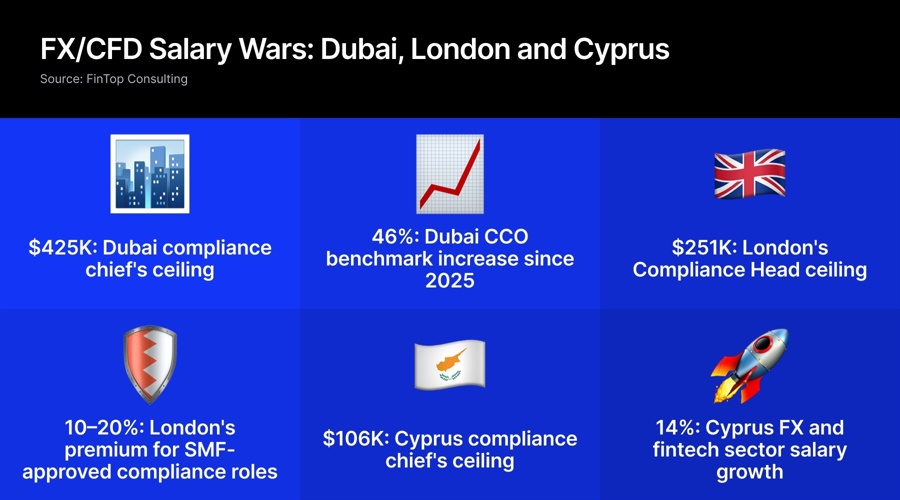
You may have heard that compensation figures are changing across financial centers like Dubai, London, and Cyprus. Recent reports show that Chief Compliance Officers in Dubai can earn between $310,000 and $425,000 annually, a figure that far exceeds salaries in London and Cyprus. The financial landscape is undoubtedly competitive, and understanding these trends can help you gauge where the best opportunities might lie.
In Cyprus, salaries in the foreign exchange sector have risen by 14%, contrasting with a 4% increase in the UAE. Such disparities reflect differing market dynamics and might influence your decision on where to focus your trading endeavors.
—
Customer Behavior Insights from Capital.com
Capital.com has reported that its clients in the UAE have traded over $1 trillion in the first half of 2026. This impressive figure represents more than 40% of the broker’s total trading volume. Notably, while trading activity is robust, only 18.3% of trades utilized stop-loss orders—the lowest among various markets.
Curiously, this raises questions about risk management practices among traders. Could improving your risk management strategies lead to better outcomes? The report indicates that trades with stop-loss settings resulted in 39% lower average losses.
—
The Impact of Google’s Advertising Policy Changes
You might be interested to know that Google has updated its advertising policies, allowing the promotion of CFDs and forex products in Denmark and Chile. This change opens up new avenues for brokers looking to reach a wider audience. However, it’s essential to remember that compliance with local regulations is still paramount.
As a trader, this could mean more accessible information and resources, making it easier for you to navigate the complex world of trading products.
—
Challenges in Customer Acquisition Costs
Brokers are facing increasing pressure as the cost of acquiring new clients continues to rise. Reports indicate that some firms are spending upwards of $800 to attract clients who may only deposit $400 to $500 initially. This imbalance could affect the sustainability of trading businesses and, by extension, your trading experience.
In light of these challenges, brokers are reassessing their marketing strategies. They understand that offering better support and fast reporting can be just as effective as simply increasing CPA rates. This evolution could benefit you as a client, as firms strive to provide better overall service.
—
The Growing Interest in Tokenized Assets
Lastly, while tokenized real-world assets are gaining traction, trading activity in this sector remains limited. Recent surveys reveal that despite a significant increase in holder addresses, secondary market transactions are still struggling to gain momentum.
You might be wondering how this affects your investments in tokenized products. Understanding the market dynamics and potential for liquidity is crucial as you explore these innovative assets.
In summary, the retail trading industry is in a state of flux, presenting both challenges and opportunities. Keeping informed about these developments can help you make more strategic decisions as you navigate this ever-changing landscape.