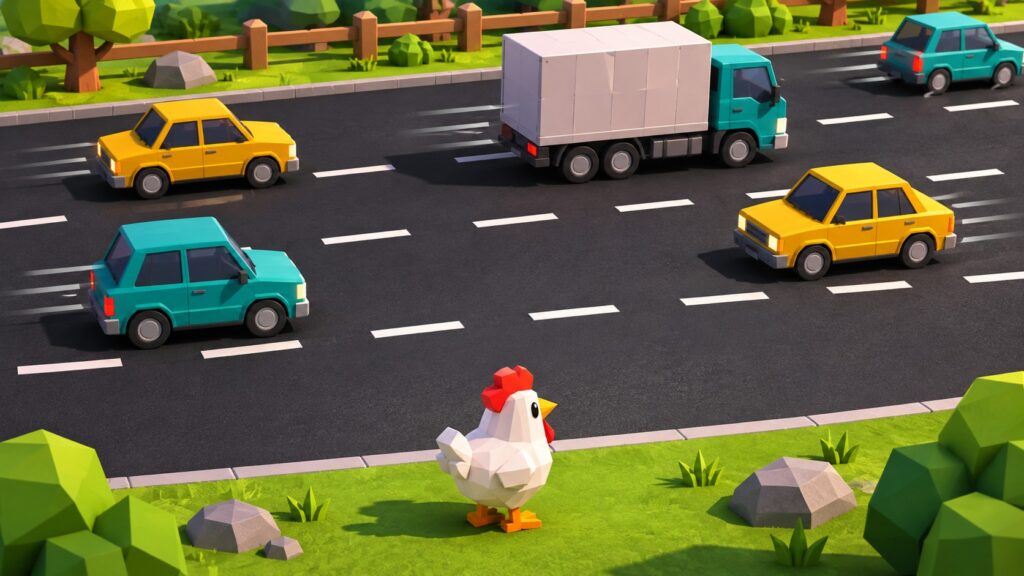
The Art of Lane-Hazard Game Design: What You Need to Know
Have you ever found yourself staring at a screen, trying to navigate a character through a busy lane filled with obstacles? If you have, you already know that the essence of lane-hazard games lies in their ability to communicate danger and movement swiftly. In this article, we’ll explore the critical elements that make these games engaging and challenging while ensuring players can easily grasp the mechanics at play. By the end, you’ll appreciate how visual clarity, intuitive controls, and well-defined rules contribute to a compelling gameplay experience.
Let’s dive into the crucial components that define successful lane-hazard games and how they create an enjoyable experience for players.
Immediate Recognition: The Importance of Visual Clarity
When you open a well-crafted lane-hazard game, your eyes should immediately focus on the character and nearby obstacles. This instant recognition is vital. You should be able to identify:
If the environment is cluttered with unnecessary visuals—like flashy animations or excessive scores—you’ll struggle to understand what’s happening. The balance between aesthetics and functionality is essential for maintaining readability.
Understanding Hazards: Communication over Complexity
When it comes to hazards, simple movement signals are often the most effective. You should be able to tell when an obstacle is approaching by its movement pattern alone. For example, a large truck and a slim motorcycle offer different timing challenges, and their animations should reflect that distinction.
Consider these effective telegraphing strategies:
By prioritizing these elements, designers can ensure that players remain aware of potential dangers.
Honesty in Hitboxes: Trustworthy Gameplay
Nothing frustrates players more than experiencing a collision that seems unfair. Hitboxes—essentially the invisible boundaries that detect collisions—should align closely with what players can visually identify.
Imagine the disappointment when your character appears to clear a gap, yet the game registers a hit. Designers should aim for simplified hitboxes that maintain consistency without sacrificing realism. This can significantly reduce player frustration.
Balancing Rewards and Gameplay: Keeping Focus on the Road
As you progress through a game, you might encounter multipliers and rewards that enhance the fun. However, they shouldn’t overshadow the primary gameplay mechanics.
Think about this: if a bright multiplier graphic takes center stage, it could distract you from the crucial task of dodging obstacles. A well-designed layout separates these elements, ensuring that rewards are visible but not intrusive.
Finger-Friendly Design: Mobile Gaming Considerations
Mobile devices have changed the way we interact with games. Since your fingers occupy space on the screen, controls must be easily accessible without obstructing your view of the hazards.
Here are some tips for effective mobile design:
These details can make all the difference in creating a smooth gaming experience.
Animation that Aids Understanding
While animations add charm and personality to a game, they should never disrupt your ability to track movement and hazards. For instance, if a character’s jump takes too long, it might confuse your perception of their location.
Animation should enhance clarity, maintaining a dependable relationship between what you see and what you control.
Transparency in Rules and Objectives
A great lane-hazard game clearly communicates its rules. You should understand how your actions influence the game, whether through direct movement or chance mechanics.
The rules should be presented in an easily digestible format, providing players with the knowledge they need to engage meaningfully with the game.
Readability Checklist: Ensuring a Smooth Experience
As you explore lane-hazard games, keep these readability criteria in mind:
This checklist not only helps designers refine their games but also aids players in selecting the best ones to enjoy.
In the end, lane-hazard games may appear simple at first glance, but behind that simplicity lies a complex web of design elements that work together to create an engaging experience. By focusing on clarity, intuitive controls, and transparent mechanics, developers can craft games that are not only fun to play but also easy to understand. So, the next time you find yourself navigating a character through a bustling lane, remember the intricate design choices that make the experience enjoyable!