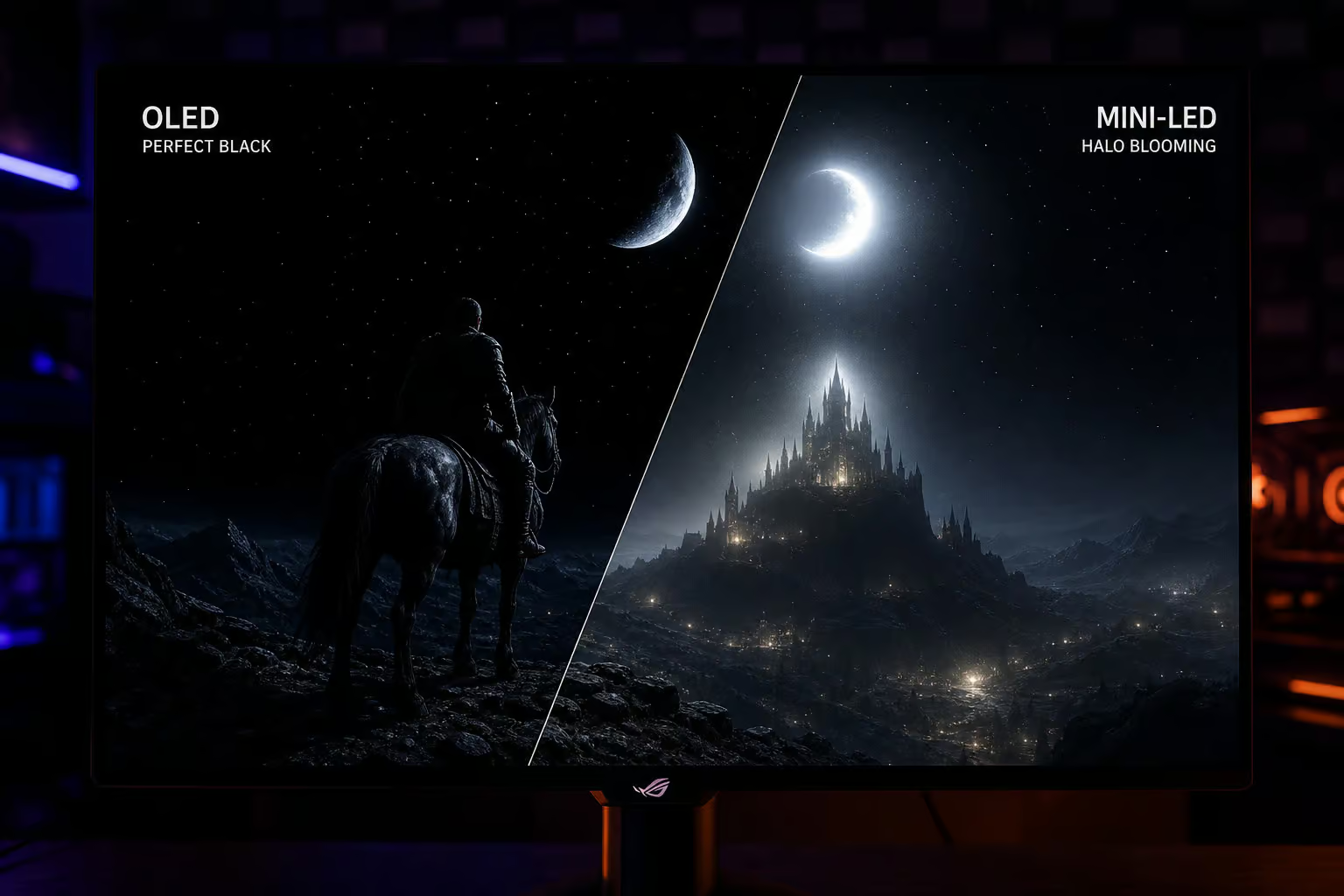
In the world of display technology, the debate between OLED and Mini-LED has never been more heated. While both types promise stunning visuals, each comes with its own set of challenges that can affect your viewing experience. Are you torn between the deep blacks of OLED and the bright, vibrant colors of Mini-LED? Understanding the nuances between these technologies can help you make an informed choice that fits your needs, whether you’re a gamer, a movie buff, or just someone who enjoys watching TV.
This article will delve into the strengths and weaknesses of OLED and Mini-LED displays. You’ll learn about performance metrics, the impact of ambient light, and how these technologies perform under different conditions. We’ll also explore emerging technologies that might change the landscape in the future. Let’s dive in!
Understanding OLED Displays: Advantages and Limitations
When it comes to lighting technology, OLED (Organic Light Emitting Diode) is a game-changer. Unlike traditional displays, OLED panels emit light at the pixel level, enabling them to produce astonishingly deep blacks and vibrant colors. This pixel-level illumination is what gives OLED its signature infinite contrast and allows for a unique 3D depth in imagery.
But there’s a catch. OLED displays can suffer from burn-in, where static images leave a permanent mark on the screen. This is especially concerning if you often leave your display on for long periods or play games with static HUDs. So, while OLED offers a visually stunning experience, you need to be cautious.
The Allure of Absolute Black
One of the standout features of OLED technology is its ability to turn off individual pixels completely, achieving true blacks. This allows for a level of micro-contrast that enhances the realism of images. Imagine wandering through a dark, atmospheric game; the tiny black pixels between illuminated details create a depth that’s hard to replicate.
If you’re serious about gaming and want to experience this pixel-perfect quality, consider models like the KTC G27P6, which boasts a remarkable refresh rate and response times.
Mini-LED Technology: Brightness Meets Challenges
In contrast, Mini-LED technology offers a different approach by using a grid of LEDs behind an LCD panel to create backlighting. This technology can produce impressive peak brightness levels, making it particularly effective in well-lit environments. However, it struggles with issues like blooming and halo effects due to its reliance on regional dimming zones.
Despite these drawbacks, Mini-LED displays can perform well in various settings. They provide a good balance between brightness and color accuracy but require careful consideration of how they handle darker scenes.
Understanding Blooming and Artifacts
One notable downside of Mini-LED is its tendency to exhibit blooming artifacts. This occurs when light from bright areas spills over into darker regions, causing a halo effect that can detract from the overall image quality. It’s essential to recognize that this is a limitation of the technology and can impact your viewing experience, especially in high-contrast scenes.
How Ambient Light Affects Your Display
Your choice of display will also depend on the lighting conditions in your room. OLED panels perform exceptionally well in dark environments, where their ability to control light enhances the experience. On the other hand, Mini-LEDs are better suited for brighter settings where high peak brightness can shine.
Consider the following factors:
Comparing Display Form Factors
Interestingly, the performance of Mini-LED technology varies significantly between desktop monitors and larger TV displays. While high-end Mini-LED TVs can deliver impressive performance, smaller monitors often struggle with issues like slow backlight latency and color accuracy.
Some brands, like KTC, are addressing these challenges by offering gaming monitors that optimize local dimming and provide low-latency controls, allowing users to tailor their experience according to their specific needs.
Future Technologies on the Horizon
Are we stuck with the limitations of current technologies? Not quite. Innovations like Tandem OLED and microLED are being developed to offer improved brightness and burn-in resistance. However, these advancements are still a few years away from being widely available in consumer products.
In the meantime, both OLED and Mini-LED have their advantages and disadvantages. Your choice should depend on your viewing habits, the types of content you consume, and the environment where you use your display.
Frequently Asked Questions
Is Mini-LED as good as OLED?
While Mini-LED can achieve higher peak brightness, it doesn’t match the pixel-level precision of OLED. The ability to produce deep blacks and micro-contrast is where OLED truly shines.
Does OLED still face burn-in issues in 2026?
Yes, OLED panels remain susceptible to burn-in, particularly with static images. While improvements have been made, caution is still necessary.
Why do professionals avoid OLEDs?
Many professionals prefer displays that offer consistent brightness and lower maintenance requirements. OLEDs can require careful management to prevent burn-in, which can be inconvenient for long work sessions.
Should I upgrade from Mini-LED to OLED?
If you prioritize perfect blacks and superior motion clarity, an upgrade to OLED may be worthwhile. However, if you often work with static content, Mini-LED could be a better choice.
What distinguishes Mini-LED from OLED?
Mini-LED uses a grid of backlighting zones, leading to issues like blooming and halos, while OLED’s emissive technology offers precise control for contrast and color.
Can I use an OLED monitor for work?
Yes, but it requires careful management to avoid burn-in from static elements. If that’s a concern, a high-quality Mini-LED monitor may be a more practical choice.
Why do some OLED monitors appear grainy?
Graininess can occur with matte-coated OLED panels, where anti-glare finishes may produce a shimmering texture over solid colors. This is often a trade-off for reducing reflections in bright environments.