Tokenization of Real-World Assets: A Practical Approach
Have you ever wondered how the future of asset ownership could evolve? Tokenization of real-world assets (RWAs) is transforming from a theoretical idea into a practical reality for asset holders and issuers alike. This shift is no longer confined to innovation labs; it’s a matter of governance, structure, and regulatory recognition that is now being actively discussed at the boardroom level. As markets mature, especially in places like the UAE, the focus has shifted from mere experimentation to actionable strategies.
In this article, we’ll explore key elements of RWA tokenization, including how it is being approached within the UAE, the importance of regulatory frameworks, and the various considerations for successfully executing a tokenization strategy.
The Shift in RWA Tokenization: From Theory to Practice
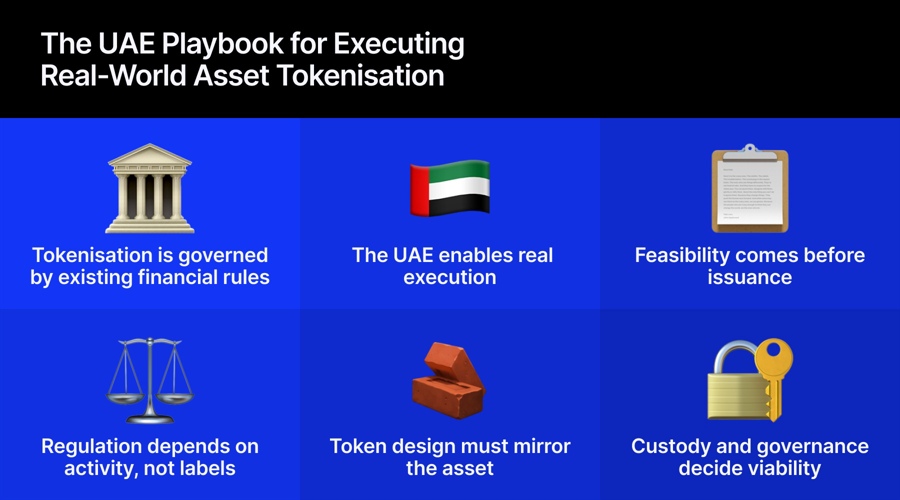
Tokenization isn’t just about creating a digital version of an asset; it’s a comprehensive exercise in capital markets and asset structuring. In the UAE, the convergence of regulatory rules, market infrastructure, and institutional capital has made this process feasible.
Many organizations are now assessing tokenization not merely as a tech initiative, but as a foundational strategy for capital markets. Why? Because the implications for governance and asset management are substantial.
Understanding Feasibility: The First Step Towards Tokenization
Tokenization begins with an essential question: Is a legally enforceable and commercially viable tokenized structure possible? This question leads to the development of a detailed tokenization blueprint, which involves:
For boards and executives, a tokenization initiative must be presented as a cohesive system. Without clear governance, custody, and regulatory frameworks, the initiative may not withstand scrutiny.
Regulatory Classification: A Crucial Component
One often-overlooked aspect of RWA tokenization is how regulators classify these assets in the UAE. The regulatory framework here adopts an activity-based approach. This means that the specific financial activities tied to the token dictate its regulatory requirements, rather than its label as a «utility» or «security» token.
This focus on economic representation rather than labels has significant implications for:
Engaging with multiple regulatory authorities is vital, making the selection of the right regulatory framework a key structuring decision.
Token Design: Aligning with Asset Economics
When it comes to token design, it’s important to align it with the economic realities of the underlying asset. Different asset types—like physical commodities, income-generating properties, or infrastructure projects—exhibit unique characteristics that influence how they should be represented digitally.
Token structures must clearly articulate:
Tokens that are designed without considering these factors may technically function but often fail under regulatory or investor scrutiny.
Importance of Custody and Bankruptcy Remoteness
Custody is a critical factor in the success of RWA tokenization initiatives. Regulators and investors prioritize asset control, focusing on:
Establishing clear custodial arrangements and bankruptcy-remote structures is essential for achieving institutional acceptance.
Continuous Credibility: Audit and Verification
For institutional-grade RWA tokenization, maintaining credibility is not a one-time effort. Independent audits and verification frameworks are crucial. These mechanisms may include:
The role of auditors often extends beyond mere verification; they influence the design and implementation of tokenization initiatives.
Governance: A Dual Approach
Tokenization elevates governance standards significantly. Clear obligations for issuers, rights for tokenholders, and operational controls must be established. Accountability is key—boards must know who can make changes and under what circumstances.
Effective governance is not just an add-on; it’s central to approval processes and long-term viability.
Legal Framework and Cross-Border Considerations
RWA tokenization in the UAE often involves multiple jurisdictions. Legal architecture must account for various factors, including:
Hybrid structures are often the most pragmatic solution, combining the flexibility of the UAE with regulatory frameworks from other locations like Switzerland or the EU.
Commercial Execution: Beyond Compliance
Regulatory compliance is just one piece of the puzzle. Many technically compliant projects fail to progress because they haven’t adequately addressed commercial execution. Tokenization introduces a new economic model that demands coherent operation across various stages—from issuance to secondary market activities.
Successful projects typically treat tokenization as a coordinated commercial initiative, with clear ownership and governance. In contrast, those that only focus on compliance may struggle to secure final approvals.
Final Thoughts: The Complexity of RWA Tokenization
The UAE has positioned itself as a leading environment for RWA tokenization, but it’s essential to recognize that complexity remains. Asset owners and issuers should approach tokenization as a multifaceted challenge that encompasses structural, regulatory, and governance considerations.
Ultimately, the transition from concept to execution in RWA tokenization is not merely incremental; it’s transformative, creating long-term value through a robust framework that supports assets throughout their lifecycle.