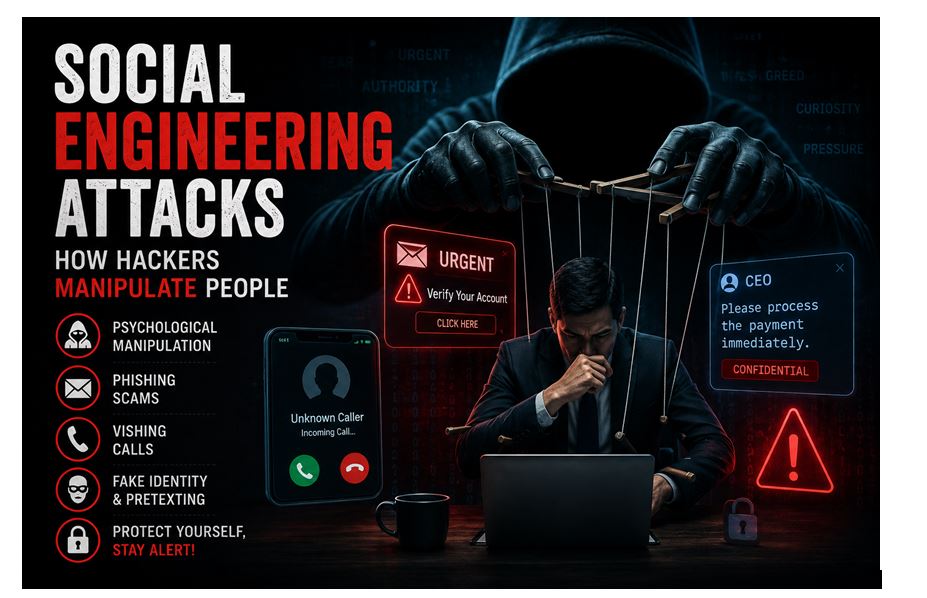
Imagine waking up one day to find your bank account empty, all because you fell for a seemingly innocent email. This scenario is more common than you might think, and it’s this very fear that keeps countless individuals alert at night. Scammers don’t always rely on complex technology; often, they exploit the human element. Understanding how these social engineering attacks work is crucial for protecting yourself from potential threats.
In this article, we’ll delve into the tactics used by cybercriminals to manipulate individuals into revealing sensitive information. You’ll learn about the various forms of social engineering, the warning signs to watch for, and effective strategies to safeguard your personal and financial data. Are you ready to empower yourself against these deceptive practices? Let’s explore this critical topic together.
What is Social Engineering?
Social engineering refers to the psychological manipulation of people into divulging confidential information. Rather than hacking into a system outright, attackers often employ tactics that exploit human vulnerabilities. After all, people are often the weakest link in cybersecurity. By understanding the nature of these attacks, you can better protect yourself.
Common Techniques Used in Social Engineering
Hackers use various strategies to trick their victims. Here are some of the most prevalent techniques:
- Phishing: This involves sending fraudulent emails that appear legitimate, tricking recipients into revealing personal data.
- Pretexting: Attackers create a fabricated scenario to gain the target’s trust, often impersonating someone in authority.
- Baiting: This tactic entices victims with promises of free goods or services, often leading to malware installation.
- Spear Phishing: Unlike regular phishing, this approach targets specific individuals, making the deception more convincing.
Recognizing these techniques is your first line of defense.
Identifying Red Flags
How can you tell if you’re being targeted? Here are some warning signs to watch out for:
- Urgency: If a message pressures you to act quickly, take a moment to think before responding.
- Unusual Requests: Be skeptical of requests for sensitive information, especially if they come from unknown sources.
- Grammatical Errors: Many phishing attempts contain poor grammar or spelling mistakes.
When you notice any of these signs, it’s time to proceed with caution.
Protecting Yourself from Social Engineering Attacks
Now that you know how these attacks work, let’s talk about how to defend against them. Here are some effective strategies:
- Verify Sources: Always double-check the sender’s email address and any links before clicking.
- Educate Yourself: Stay informed about the latest scams and tactics used by cybercriminals.
- Use Strong Passwords: Create complex passwords and change them regularly to enhance your security.
By implementing these measures, you can significantly reduce your risk of falling victim to social engineering scams.
The Importance of Awareness and Training
Have you ever considered how awareness plays a crucial role in cybersecurity? Organizations often conduct training sessions to educate employees about the risks associated with social engineering. This proactive approach not only protects the individual but also secures the entire organization.
Involving everyone in the conversation about cybersecurity can create a culture of vigilance that benefits all.
Final Thoughts on Social Engineering
Understanding social engineering is key to safeguarding your personal information. By recognizing the tactics used by scammers and remaining alert to potential threats, you can protect yourself effectively. Remember, the more informed you are, the less likely you are to fall prey to these manipulative schemes. Stay cautious, stay informed, and you’ll be better prepared to navigate the digital world securely.