So, you’re curious about the average time adolescents spend playing video games each day, and you want to know if your own gaming habits are within the norm. You’re not alone. Many people search for a single figure that can validate their own gaming experiences or prompt them to reconsider their habits.
According to a recent study by OxWell, involving over 12,700 students aged 12 to 18, a surprising 31.2% of teenagers engage in gaming for 3.5 hours or more each day. However, the findings reveal a deeper truth: the sheer number of hours spent gaming doesn’t tell the whole story. Instead, it’s critical to investigate how and why teens play. In this article, we’ll delve into the survey results, explore the different gaming behaviors, and discuss the broader implications for well-being.
Understanding Average Gaming Time: A Misleading Metric
You might have seen headlines claiming that teens spend alarming amounts of time gaming. But is this really indicative of a problem? The OxWell survey revealed that 22% of students reported no gaming at all. When researchers analyzed the data, they found no significant correlation between gaming hours and mental well-being (P=.41). This means that playing two hours a day doesn’t necessarily make someone better or worse off than someone gaming for six hours.
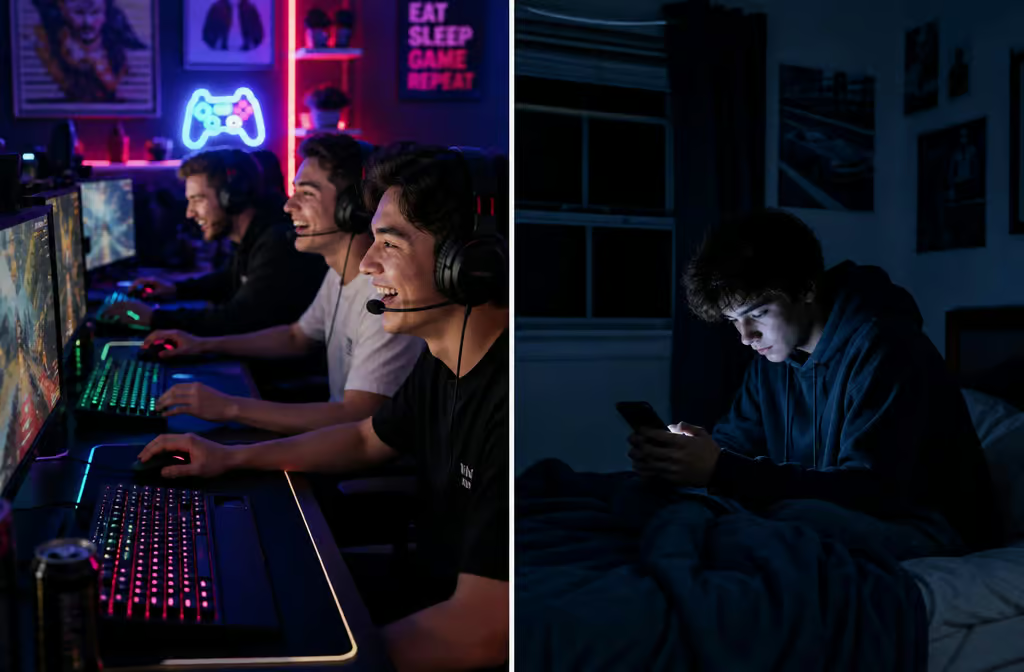
Think about it: two individuals can easily spend the same amount of time gaming yet have vastly different experiences. One could be sharing laughs with friends in a cooperative setting, while the other might be mindlessly scrolling through mobile games in isolation. The context of gaming matters just as much, if not more, than the time spent.
Not All Gaming Time Is Created Equal
What if you discovered that the device you choose to play games on could impact your overall well-being? Indeed, the OxWell study found that computer and console gaming showed a slight positive correlation with well-being (r=0.12), while mobile gaming was linked to a slight negative effect (r=-0.09). This distinction is crucial, especially considering that 93% of UK adolescents own a mobile phone.
It’s important to recognize that the quality of gaming experience varies significantly. Engaging in focused gaming sessions on a console can foster social connections and provide a sense of achievement, while mobile gaming often involves fragmented play that may disrupt sleep and focus.
Six Distinct Profiles of Heavy Gamers
The study’s analysis divided heavy gamers—those playing more than 3.5 hours daily—into six categories. This classification helps clarify who might be experiencing issues and who isn’t.
The Adaptive Majority (43.53% – Largest Group)
This group plays primarily on computers or consoles and demonstrates the highest well-being scores. They enjoy gaming as a part of a balanced life, showing that heavy gaming can coexist with mental health.
Casual Computer Gamers (22%)
These players engage moderately in computer gaming and have below-average addiction scores. They enjoy gaming without it interfering with their daily lives.
Casual Phone Gamers (14.53%)
Playing more on mobile devices but without raising significant concerns, this group maintains a balance that doesn’t lead to problematic gaming.
Unknown Device Gamers (12.04%)
These individuals did not specify their gaming device but reported low addiction scores, indicating that they are less likely to face significant issues.
Maladaptive Computer Gamers (6.17%)
This group shows high addiction scores and lower well-being. They are at a greater risk for anxiety and aggression, typifying a problematic gaming profile.
Maladaptive Phone Gamers (1.74% – Smallest Group)
Overwhelmingly female, this group faces the most significant challenges. They use mobile gaming as a coping mechanism for trauma, highlighting a serious concern that goes beyond mere gaming hours.
Gender Dynamics in Gaming Behavior
Stereotypes often portray male gamers as the typical “problem gamers,” but the reality is more nuanced. While maladaptive computer gamers tend to be male, a less visible yet significant group of young women playing on mobile devices often face severe mental health challenges. Their gaming habits frequently intertwine with past trauma, demonstrating that gender plays a crucial role in understanding gaming behavior.
Identifying Problematic Gaming: It’s Not Just About Hours
So, if time spent gaming isn’t the best indicator of potential issues, what is? The OxWell data suggests that loss of control and functional impairment are critical factors. Here are some real warning signs to watch out for:
These indicators are far more telling than simply counting hours.
Shifts in Gaming Time: The Pandemic’s Impact
Adolescent gaming habits have changed since the pandemic, with many not returning to pre-COVID levels. The data from OxWell was collected in mid-2021, and while some restrictions had eased, the lingering effects of the pandemic are evident in the numbers.
Research from MIDiA indicates that globally, the average gamer plays for over an hour daily. The rise in mobile gaming is also noteworthy, with a significant increase in young people engaging in it. This shift highlights the need to understand gaming as part of a broader digital landscape.
Determining What Constitutes Too Much Gaming
You might wonder, “How much gaming is too much?” The truth is, there isn’t a one-size-fits-all answer. The focus should shift from a specific hour threshold to assessing functional impairment.
Instead of fixating on the clock, consider the individual’s life context. If gaming is disrupting relationships or responsibilities, it’s time to take a closer look.
Global Perspectives and Patterns
The findings from the OxWell survey are particularly relevant to English adolescents, yet similar patterns appear across various cultures. Studies in different countries have shown comparable device and gender splits, suggesting that these trends are not limited to one geographic area.
As you assess your own or someone else’s gaming habits, remember to inquire about the context, not just the hours. This approach will yield a more comprehensive understanding of the impact gaming has on well-being.