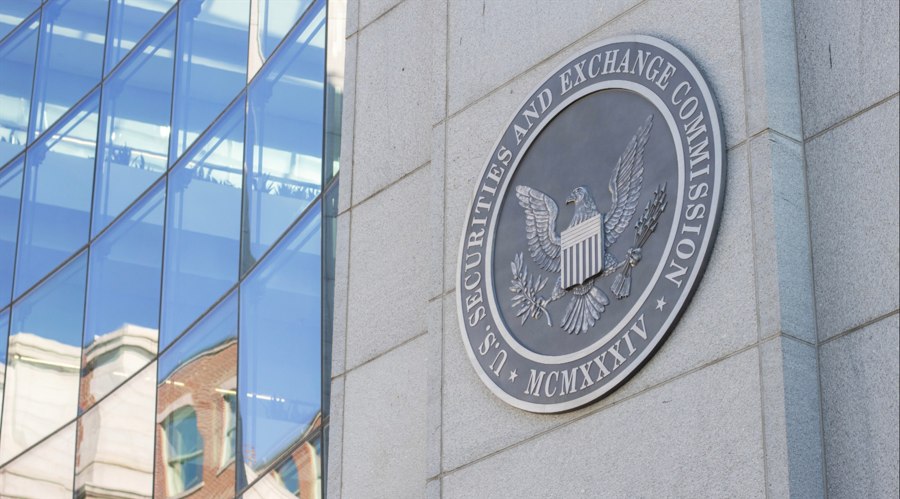
In the ever-evolving landscape of financial services, recent developments regarding eToro USA Securities and Alpaca Securities are making headlines. Both companies have successfully obtained no-action relief from the U.S. Securities and Exchange Commission (SEC). This means they can operate accounts that do not hold customer cash in-house but rather keep it at banks or money transmitters. So, what does this mean for investors and the broader market? Let’s dive into the details and explore how this impacts your trading experience.
## Understanding No-Action Relief from the SEC
No-action relief is a significant regulatory win for firms like eToro and Alpaca. It allows them to operate under specific conditions without the immediate risk of SEC enforcement. For you, this means that the money in your brokerage account may not be directly held by the firm but is instead safeguarded at a secure location like a bank.
### Capital Requirements for eToro and Alpaca
Both companies have defined capital requirements as outlined in their recent SEC communications:
These stipulations ensure that both firms maintain financial stability while facilitating your trading activities.
## Expansion Plans in the U.S. Market
Interestingly, both eToro and Alpaca are on ambitious growth trajectories. eToro recently announced its intention to acquire TradeZero, a U.S. equities and options broker, for a staggering $231 million. This deal is expected to finalize in the first half of 2027. How will this acquisition enhance your trading options? It could mean more diverse products and improved user experiences.
### Alpaca’s Global Reach
Alpaca is already making waves internationally. It provides U.S. market access to foreign brokers, such as the Indonesian firm Valbury, which began routing its clients’ U.S. stock orders to Alpaca earlier this year. This expansion allows you to access U.S. markets more easily, even from abroad.
## The Mechanics of Money Movement
So, how does the money actually flow in these new account structures? The SEC allows funds to be held in external accounts at banks or money services businesses. Here’s how it generally works:
1. When you place a trade, your instruction sends the money to the clearing firm via a money transmitter.
2. The transaction is settled on the following business day, and the shares are credited to your account.
3. After you sell a share, the proceeds are returned to your external account under a pre-agreed authorization.
Alpaca has committed to providing daily reconciliation reports to ensure transparency and accuracy.
### Customer Agreements and Protections
It’s important to note that customer agreements will explicitly state that funds in external accounts are not considered part of your brokerage account. Thus, they lack the protection typically offered by the Securities Investor Protection Corporation (SIPC). This means that while your funds are safeguarded, you should be aware that they are not covered in case of firm bankruptcy.
## The Path Forward: What’s Next?
The SEC’s no-action relief is not a permanent rule; it serves as a staff position based on specific circumstances. Moreover, it leaves open the possibility of future changes. While both eToro and Alpaca will continue to offer traditional trading accounts, they are also exploring innovative ways to enhance your trading experience.
With these changes on the horizon, it’s crucial for you to stay informed about how these developments may affect your investments. Are you ready to take advantage of the new opportunities these firms are offering?