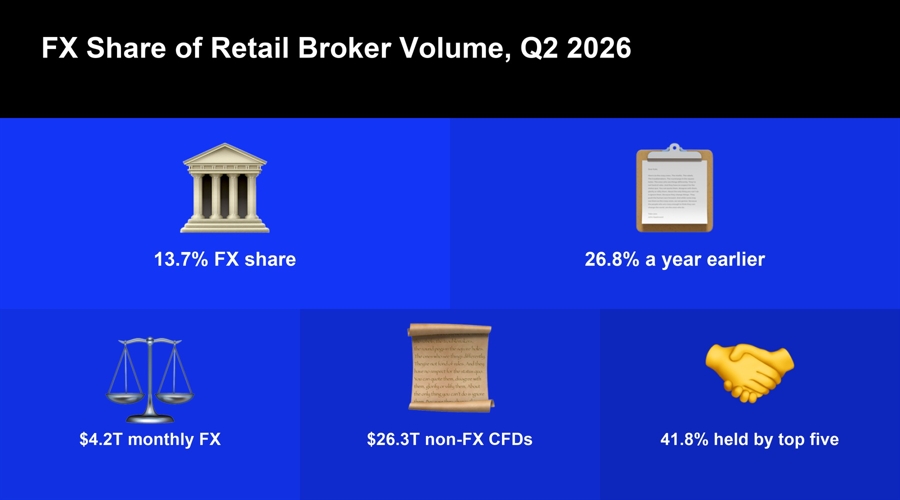
The world of trading is constantly evolving, and understanding the latest trends in the forex market is essential for anyone involved. Have you ever wondered how currency pairs are faring amidst the booming interest in other trading instruments? Recent data from FM Intelligence reveals some surprising shifts. In the second quarter of this year, currency pairs represented only 13.7% of the trading volume reported by retail brokers, a significant drop from 26.8% a year prior. But why is this happening?
This article will delve into the latest figures regarding forex trading, the performance of major brokers, and the broader implications for the retail trading landscape. We’ll explore the declining interest in currency pairs, the rise of other asset classes, and what this means for traders like you.
Decline in Currency Pairs Trading Volume
The forex market, once the powerhouse of retail trading, is experiencing a notable downturn. As per FM Intelligence, the total monthly forex trading volume among tracked brokers fell to $4.2 trillion, down from $6.4 trillion. This decline highlights a larger trend: traders are increasingly gravitating towards other assets.
You might be curious about what’s driving this shift. It appears the allure of index, commodity, equity, and crypto CFDs has captivated many traders, with volumes soaring from $17.4 trillion to $26.3 trillion. This indicates a significant redirection of focus within the trading community.
Concentration Among Major Brokers
Interestingly, the five largest brokers now command an impressive 41.8% of the overall trading volume attributed to named firms. What’s even more telling is that these brokers generate only 4% of their volume from currency pairs.
The leading brokers—EC Markets, TMGM, IC Markets, IG Group, and JustMarkets—have all shown a decline in forex trading, from 10.9% to 4% of their combined volume. This raises a question: Is the forex market losing its appeal, or are traders simply diversifying?
Industry Performance and Broker Comparisons
While some major players have managed to hold their ground, the overall industry is facing challenges. In fact, FM Intelligence’s recent report highlighted a 9.3% decline in trading activity between Q1 and Q2. Notably, the median broker experienced a staggering 12.6% loss, with 47 out of 51 brokers reporting lower monthly volumes.
The data reveals that only two firms, EC Markets and TMGM, reported increases. The rest of the industry appears to be grappling with the shifting landscape, as many traders focus their efforts on more lucrative opportunities like metals, equities, and cryptocurrencies.
Understanding the Shift in Trading Models
So, what’s behind the decline in forex trading? One contributing factor seems to be a change in trading models among brokers. FM Intelligence’s estimates suggest that many smaller brokers have adjusted their forex shares dramatically, dropping from 65-70% to 27-30% in a single quarter.
When focusing on the 32 brokers that have transitioned gradually, the forex share fell significantly from 20.5% to 11.7%. This indicates a broader market trend where even established players like IC Markets and Saxo Bank have seen their forex shares decrease.
What Lies Ahead for Forex Trading?
The latest findings from FM Intelligence paint a complex picture of the forex market. As trading activity continues to shift towards other assets, it’s essential to stay informed. With the increasing popularity of alternative instruments, traders must adapt to the changing landscape.
Are you prepared for these shifts? Understanding market trends and adjusting your strategies accordingly could be vital for your trading success. Whether you focus on forex or choose to diversify into other areas, staying updated on industry changes will always be your best strategy.