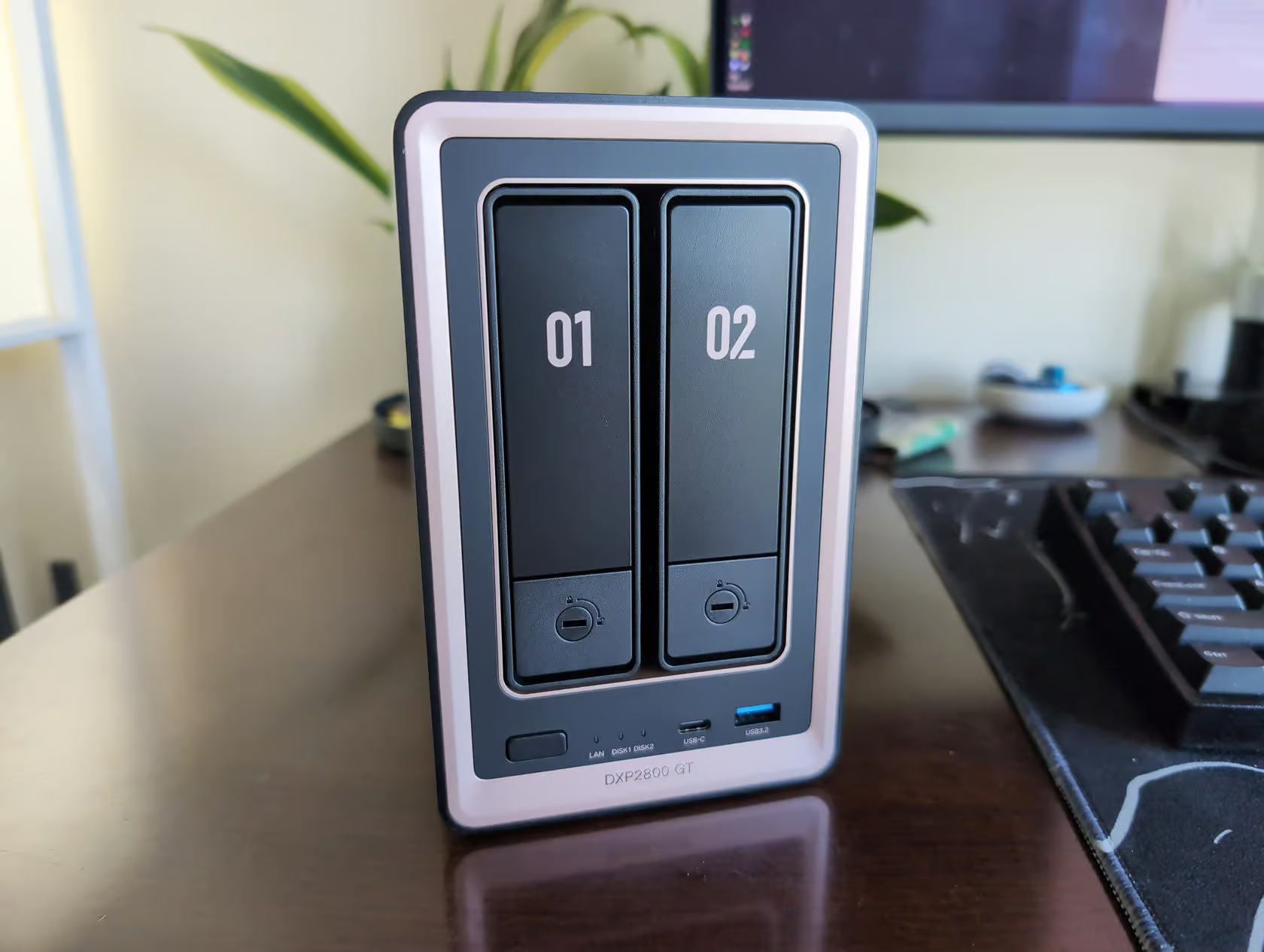
Exploring the DXP2800 GT: Is It the Right NAS for You?
Are you in the market for a new NAS (Network Attached Storage) solution? The latest offering from UGREEN, the DXP2800 GT, has stirred quite the buzz. Promising enhanced performance with its upgraded specs, many are left wondering: is this device truly a game-changer, or just a repackage of existing technology? In this article, we’ll dive deep into what the DXP2800 GT brings to the table and help you determine whether it’s the right fit for your needs.
Let’s break down its features, compare it with its predecessor, and explore the implications of its design and capabilities. By the end, you’ll have a clearer understanding of whether the DXP2800 GT meets your home or office requirements.
Key Features and Specifications of the DXP2800 GT
The DXP2800 GT packs a punch with its specs, but what does that really mean for you? Here are the primary highlights:
- Processor Swap: Moving from Intel’s N100 to the AMD Ryzen R2514 offers more cores and threads.
- Memory Shift: The switch from DDR5 to DDR4 ECC raises questions about performance versus reliability.
- Network Upgrade: A jump from 2.5GbE to a robust 10GbE port promises significantly faster data transfer rates.
However, the real question is: how do these changes impact your everyday usage?
Design and Build Quality of the DXP2800 GT
When it comes to aesthetics, the DXP2800 GT shines. Its sleek, space gray aluminum chassis with gold accents makes it an eye-catching addition to your workspace or living area. Unlike traditional rack-mounted servers, this unit is designed for visibility, allowing it to blend seamlessly with your home decor.
Cooling and Noise Management
UGREEN has made thoughtful design choices to manage heat and noise. The chassis includes a magnetic dust filter, making maintenance a breeze. With the fan operating quietly between 29–34 dB, you may forget it’s even running—unless you’re transferring large files.
Port Configuration and Usability
Convenience is key, and the DXP2800 GT doesn’t disappoint. It features multiple USB ports, including USB-C and USB-A, all capable of 10Gb/s speeds. This allows for quick access to external drives or camera cards without having to reach behind the unit.
Additionally, the HDMI 4K output enables direct media playback, making it a handy option for those wanting a straightforward media setup in their living room.
Storage Capacity and Flexibility
The DXP2800 GT supports two SATA HDD bays, accommodating drives up to 32TB each, along with two NVMe SSD slots. Interestingly, these bays also support U.2 SSDs, providing more options for users with enterprise-grade storage needs.
You can achieve a maximum capacity of 80TB, which is more than sufficient for most home users. The device supports multiple RAID configurations, although RAID 5 or 6 isn’t included.
CPU and Memory Tradeoffs: What You Need to Know
The heart of any NAS is its CPU and memory. The DXP2800 GT is equipped with the AMD Ryzen R2514, offering four cores and eight threads. While this sounds impressive, you may wonder how it performs in real-world scenarios.
AMD Ryzen R2514: Is It Worth the Upgrade?
While this processor boasts a higher CPU Mark, it’s essential to consider your specific workloads. If you plan to run multiple Docker containers or virtual machines, the extra threads will be beneficial. However, the standard model’s Intel N100 is still capable, handling numerous containers without issue.
Memory Options: ECC vs DDR5
One significant tradeoff is the switch from DDR5 to DDR4 ECC memory. While ECC can enhance data integrity, it may not be worth the performance hit for most users. If you’re not dealing with critical data, the speed of DDR5 could be more advantageous for your daily tasks.
Media Serving Capabilities: The AV1 Shortcoming
If you’re looking to set up a media server with Plex or Jellyfin, you might need to reconsider. The DXP2800 GT lacks hardware support for AV1 decoding, which could be a dealbreaker as this codec gains traction. Software transcoding can impact CPU performance, especially if you’re multitasking.
Networking Speed and Capabilities: The 10GbE Advantage
The standout feature of the DXP2800 GT is undoubtedly the 10GbE RJ45 port. This upgrade allows for significantly faster data transfer, especially useful for high-resolution video editing or large file backups. However, to fully utilize this capability, your entire network infrastructure must be compatible, which could involve additional investments.
Power Consumption and Efficiency
While the DXP2800 GT offers enhanced performance, it comes with a catch: higher power consumption. UGREEN rates it significantly higher than the standard model. If you plan to run this device 24/7, the long-term electricity costs could outweigh its initial price.
Software: UGOS Pro and Community Support
Switching from a different NAS solution? The UGOS Pro software is user-friendly and versatile, offering Docker support, surveillance management, and local cloud drive integration. Plus, community-driven support is solid, with forums and guides readily available.
Community Feedback: DXP2800 GT vs Standard DXP2800
User opinions are mixed, with some praising the DXP2800 GT for its upgraded specs, while others voice concerns about the trade-offs. If you prioritize 10GbE network capabilities and plan to run heavy Docker workloads, the GT may be a suitable choice. However, for users focused on media serving and lower power consumption, the standard DXP2800 still has its merits.
Ultimately, the DXP2800 GT is designed for specific use cases. Consider your unique needs, and weigh the benefits against the drawbacks before making a decision.