Have you ever found yourself in a multiplayer match, only to be eliminated in mere seconds, leaving you bewildered? One moment, you feel confident, but suddenly an opponent zips around the corner, executes a flawless maneuver, and takes you out before you even register what’s happening. This phenomenon is all too common in today’s gaming culture, often attributed to players known as «sweats.»
So, what does it mean to be «sweaty» in gaming? Essentially, it refers to individuals who employ advanced tactics and optimal loadouts to enhance their chances of winning, treating casual games with the same intensity as a high-stakes tournament. In this article, we’ll dive into the characteristics of sweaty players, the mechanics behind their gameplay, and why this competitive spirit can sometimes be a source of frustration for others.
Understanding the Concept of «Sweat» in Gaming
The term «sweat» has its roots in high-pressure gaming environments, such as esports or serious competitive matches. It has now permeated casual gaming, especially in popular titles like Call of Duty.
Players commonly utilize techniques such as slide-canceling and jump peeking to gain an edge. However, there’s a crucial distinction between a sweat and a typical «try-hard.» While a «try-hard» may desperately strive for victory without the necessary skills, a true sweat combines mechanical finesse with strategic gameplay.
For many, being labeled as a sweat can be a badge of honor, showcasing their commitment to mastering the game. Yet, for others, it serves as a convenient excuse for defeat, allowing them to dismiss their opponent’s superior skills.
The Mechanics Behind Sweaty Gameplay
When you analyze sweaty gameplay, it becomes clear that it’s not just about better aim; it’s about how players manipulate game mechanics.
Active Movement Techniques
In modern shooters, players often rely on rapid, high-frequency inputs. Techniques like bunny hopping maintain momentum, while slide-canceling resets tactical sprinting, enabling players to navigate the battlefield with agility.
One highly debated move is «snaking,» where players alternate between crouching and standing behind cover. This tactic distorts their hitbox, making them frustratingly hard to target during firefights.
Skill Versus Exploitation
It’s essential to differentiate between skillful mechanics and passive exploitation. While advanced movement techniques require a certain level of skill, some tactics like shield-turtling offer low-effort advantages.
This tactic allows players to use a riot shield for passive protection while still attacking, diluting the competitive experience for others.
Sweating Without Skill: Is It Possible?
You might think that high skill is a prerequisite for being considered a sweat, but that’s a common misconception. In reality, «sweatiness» often stems from your behavioral intent and effort level, not just your final performance.
Many players, despite not being particularly skilled, find themselves putting in maximum effort, button-mashing and frantically adjusting their strategies. You can be a «low-tier sweat,» consistently trying hard without the mechanics to back it up.
The Psychological Aspect: Why We Blame Others
Often, the friction between casual and sweaty players arises from hardware discrepancies and matchmaking systems.
The Ego Defense Mechanism
When faced with defeat, it’s all too easy to label someone as «sweaty» to protect your ego. This behavior serves as a coping mechanism, allowing players to rationalize their losses by dismissing the skills of their opponents.
Just consider how absurd it would be in sports: a golfer wouldn’t choose inferior equipment just to level the playing field. Yet, in gaming, some players expect others to «dumb down» their skills for a fairer match.
The Competitive Landscape: Couch vs. Command Center
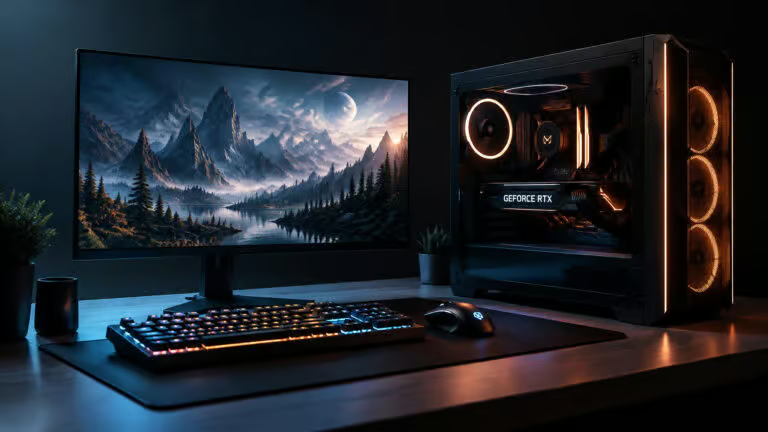
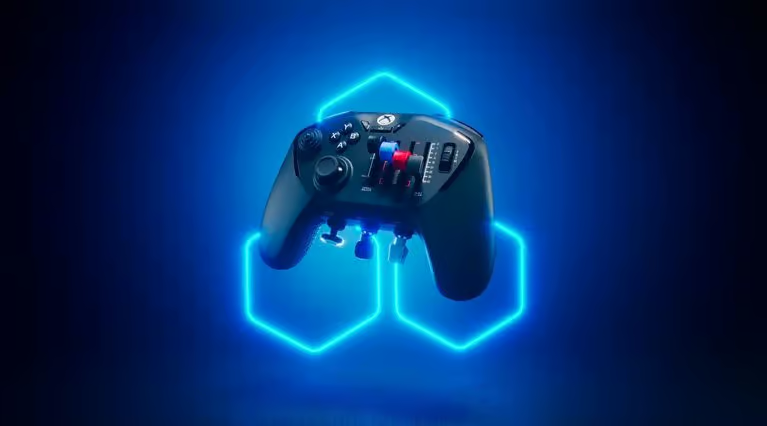
The disparity in gaming setups also contributes to this divide. Picture a casual player lounging on a couch with a large TV, while their opponent sits at a desk with a high-refresh-rate monitor and a custom controller.
This hardware advantage makes a noticeable difference, turning casual players into easy targets for those who have optimized their setups.
Matchmaking: Fanning the Flames
Modern skill-based matchmaking (SBMM) adds another layer of complexity. By consistently pairing players of similar skill levels, it eliminates the chaotic charm of casual lobbies. As a result, everyone feels pressured to maximize their performance, leading to a hyper-competitive atmosphere even in casual settings.
The Commercialization of Gaming Culture
The gaming industry capitalizes on this competitive tension by integrating terms like «sweat» into their marketing strategies.
Major digital storefronts utilize gaming slang to attract traffic. For instance, platforms often link search terms related to competitive gaming with product listings, driving sales while tapping into community discussions.
Is «Sweat» Toxic to the Gaming Community?
This raises an important question: does being a sweat negatively impact the gaming experience? In many cases, players label others as «sweaty» when they feel overwhelmed.
However, employing the game’s mechanics to achieve success isn’t inherently toxic. In fact, optimizing strategies is fundamental to competitive play. True toxicity arises when players expect their opponents to handicap themselves, compromising the integrity of the game.
Whether on a console or a high-end PC, it’s essential to let players utilize all available tools. If someone invests in equipment and techniques to gain an edge, they’re simply playing the game as it was designed—pushing the boundaries of what’s possible.