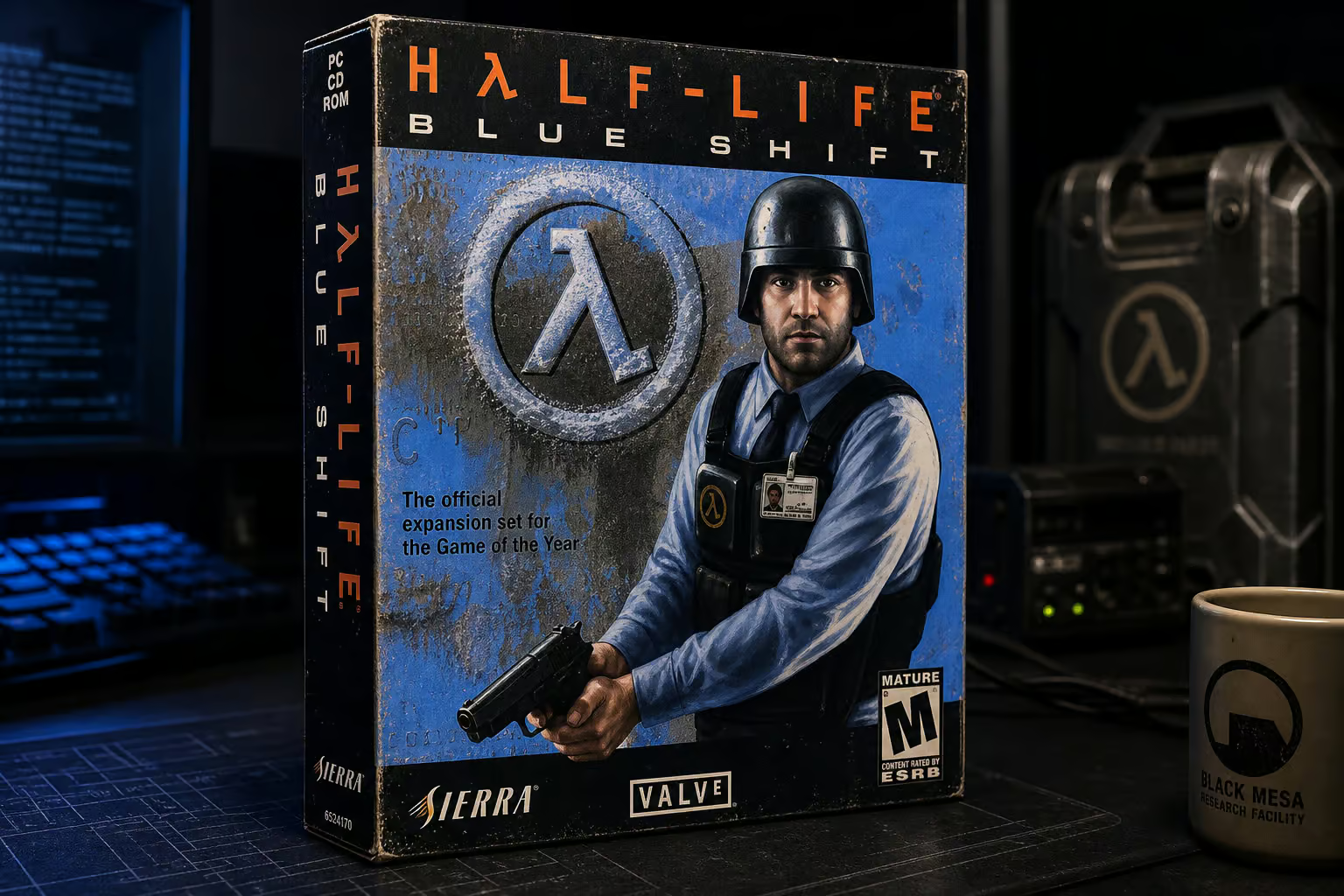
I can still vividly recall the thrill of unboxing Half-Life: Blue Shift on its release day. It felt almost surreal, like discovering a hidden gem in the gaming universe. At its core, this expansion exemplifies how constraints can breed creativity, particularly when the Sega Dreamcast project was scrapped. Here, we dive deep into the intricate world of Half-Life: Blue Shift, exploring its origins, gameplay, and enduring legacy.
Key Insights on Half-Life: Blue Shift
Initially crafted by Gearbox Software under the title «Guard Duty,» this project was intended as exclusive content for the Dreamcast. However, when plans fell through, the developers shifted gears, releasing it as a standalone title for PC.
The storyline cleverly employs a «harmonic reflux» mechanic, allowing players to traverse a continuous timeline and interact with iconic character Gordon Freeman in real-time, without interruptions from cutscenes. Despite receiving a mixed reception with a Metacritic score of 71/100, it still sold around 800,000 copies, proving its worth in the gaming market.
Table of Contents
- The Birth of Half-Life: Blue Shift
- Experiencing Black Mesa as a Security Guard
- The Resonance Cascade: A Unique Perspective
- Understanding the Harmonic Reflux Mechanic
- Escorting Dr. Rosenberg: Tactical Gameplay
- The High Definition Pack: Visual Enhancements
- Critique vs. Commercial Success
- The Standalone Nature of Blue Shift
- Digital Preservation and Its Impact
- Frequently Asked Questions
The Birth of Half-Life: Blue Shift
Upon examining its background, it’s clear that Half-Life: Blue Shift isn’t just another expansion. This title emerged from collaboration between Gearbox, Valve, and Sierra On-Line, initially aimed for the Sega Dreamcast. But with the console’s abrupt exit from the market, Gearbox had to rethink its strategy. Instead of abandoning the project, they transformed it into a standalone experience for PC players.
This pivot allowed Blue Shift to carve out its own niche, offering a fresh perspective within the Half-Life universe. While critics noted its brevity, the demand for any return to Black Mesa was palpable.
Experiencing Black Mesa as a Security Guard
Switching from the brilliant physicist to an everyday security guard adds a new layer of depth to the Black Mesa experience. As a player, you’re not saving the world; you’re merely trying to survive amidst chaos.
This shift in perspective creates a fresh atmosphere in the game, making the stakes feel more immediate and personal. You’re navigating through a disaster, trying to get by instead of engaging in grand scientific battles.
The Resonance Cascade: A Unique Perspective
In the main storyline, you inhabit the role of Barney Calhoun, a security guard caught in the middle of the infamous resonance cascade. As you attempt to fix a malfunctioning elevator, a catastrophic event unfolds, tearing a rift into the alien world of Xen. Your mission? Navigate through hostile environments while contending with both extraterrestrial threats and military forces.
This approach emphasizes a ground-level narrative, contrasting sharply with the grandiose tales seen in other Half-Life entries. It’s a fascinating exercise in storytelling that resonates well with players.
Understanding the Harmonic Reflux Mechanic
The GoldSrc engine is renowned for maintaining player immersion, and Blue Shift takes this a step further with its harmonic reflux mechanic. This clever design choice allows you to witness key moments involving Gordon Freeman without breaking the gameplay flow.
Instead of traditional cutscenes, you experience these pivotal encounters firsthand. The harmonic reflux serves as a narrative device, enabling teleportation between different locations while keeping you engaged in the action.
Escorting Dr. Rosenberg: Tactical Gameplay
The gameplay mechanics shift dramatically as you take on escort missions, focusing on keeping Dr. Rosenberg alive. Unlike typical shooter gameplay, your survival hinges on tactical decision-making.
Your primary objective is to ensure the safety of your NPC companion, making the game’s pacing unique. You’ll find yourself predicting enemy movements and strategizing to protect Dr. Rosenberg, which adds a layer of tension and excitement.
The High Definition Pack: Visual Enhancements
One of the most significant legacies of Half-Life: Blue Shift is its High Definition Pack, which elevated the overall visual experience. Originally designed for the Dreamcast, these assets featured higher detail and polygon counts.
As the game transitioned to PC, these enhanced graphics set new standards for visual fidelity in gaming. Players were introduced to upgraded character models and weapons, reshaping their expectations for graphics in future titles.
Critique vs. Commercial Success
It’s fascinating to observe the disparity between critics’ reviews and player reception. While some critics were disappointed by the game’s short length, many players embraced its concise design, perfectly suited for the gaming climate of 2001.
The Standalone Nature of Blue Shift
Upon its release on June 12, 2001, Blue Shift stood out as a standalone product, unlike traditional expansions that required the base game. Critics quickly pointed out its limited content, but players flocked to it, leading to impressive sales figures.
Digital Preservation and Its Impact
As technology advanced, many GoldSrc titles faced compatibility issues with modern systems. However, Blue Shift found new life on platforms like Steam, ensuring its accessibility for new generations of gamers.
Community-driven efforts to patch the game have preserved its legacy, allowing players to experience Barney Calhoun’s story even decades after its initial release.
Frequently Asked Questions
What was Half-Life: Blue Shift?
Originally known as «Guard Duty,» it was developed as bonus content for the Sega Dreamcast but was later released as a standalone PC title.
Is Blue Shift canon?
Yes, it is recognized as part of the Half-Life series timeline, offering a unique view of events occurring alongside Gordon Freeman’s journey.
Is Half-Life: Blue Shift worth playing?
Absolutely! It provides a distinctive gameplay experience and a valuable perspective on the Black Mesa incident.
How long does it take to complete Half-Life: Blue Shift?
The campaign is designed to be completed in a single session, making it perfect for quick play.
What is the High Definition pack included in the game?
This pack features enhanced character models and weapon assets, providing a more visually appealing experience compared to the original game.
How does the ‘harmonic reflux’ work in the story?
It serves as a technical narrative device, allowing seamless movement across different locations without interrupting the gameplay flow.
Can I play Blue Shift without the original Half-Life?
Yes! It was designed as a standalone title, so you can enjoy the experience independently.